

Destination Wedding Post-Production | Managing Lighting Challenges from Sunset Beach to Historic Cathedral
Destination weddings are visually beautiful, emotionally powerful, and technically demanding. A single wedding gallery may move from a golden sunset beach ceremony to a historic cathedral, from natural daylight to candles, from soft portraits to fast-moving receptions under mixed artificial light.
For photographers, studios, and photo agencies, these lighting shifts create one major challenge: how do you keep the full gallery consistent, natural, premium, and ready for client delivery?
This is where professional destination wedding post-production becomes more than simple color correction. It becomes a complete business workflow for growing a wedding photography studio, creating standardized wedding editing for teams, improving delivery speed, and increasing studio profitability.
Why Destination Wedding Editing Is More Complex Than Regular Wedding Editing
Destination weddings often include many different locations and lighting conditions in one event. A photographer may shoot getting-ready images in a hotel room, portraits at the beach, a ceremony inside a cathedral, and a reception under warm indoor lights.
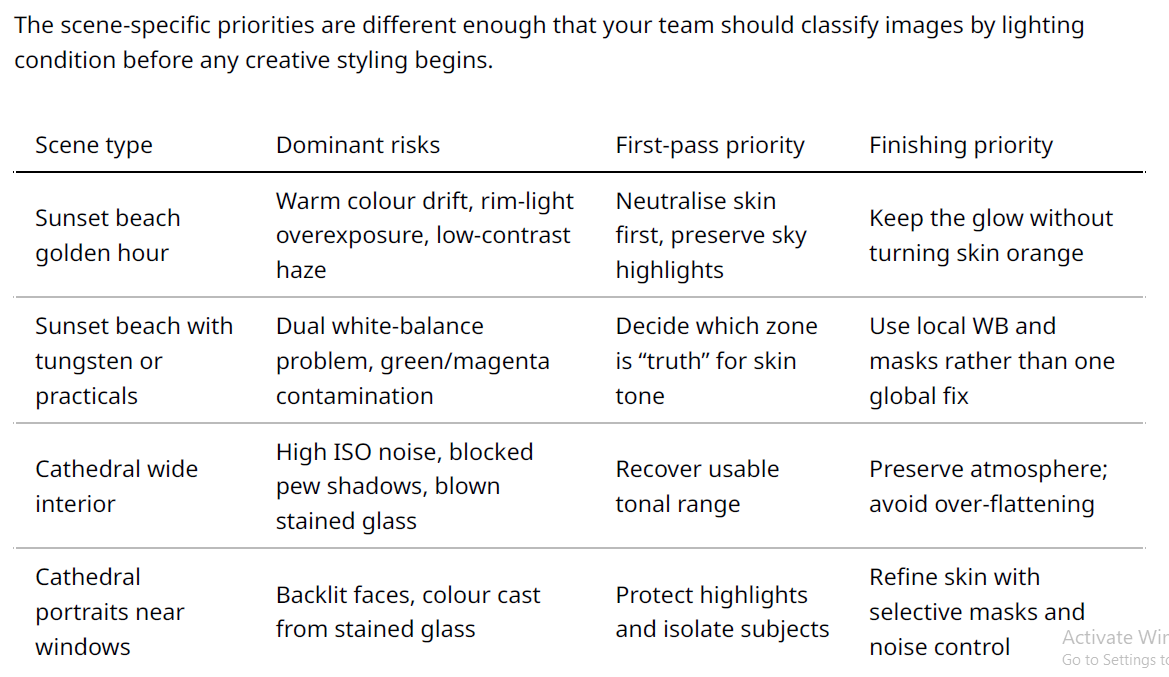
Each scene has its own editing challenge. A sunset beach scene may look too warm or too orange. A cathedral ceremony may have low light, high ISO noise, deep shadows, and bright stained-glass windows. A reception may include tungsten lights, LED lights, candles, and DJ color effects in the same frame.
If the same preset is applied to every image without adjustment, the gallery can quickly lose consistency. Skin tones may change from scene to scene. Whites may look yellow in one section and blue in another. Shadows may become too flat or too noisy.
For studios working with multiple photographers, associate shooters, or editors, the challenge becomes even bigger. This is why standardized wedding editing for teams is now essential for professional wedding businesses.
Sunset Beach Weddings: Preserving Warmth Without Losing Natural Skin Tones
Beach weddings during sunset are some of the most beautiful scenes in wedding photography. The warm light, glowing sky, water reflections, and romantic atmosphere create unforgettable images. But in post-production, this type of light needs careful control.
1. Avoid Over-Warming the Entire Gallery
Sunset light naturally brings orange, gold, and magenta tones. These tones are beautiful in the sky, sand, and background, but they can make skin look too red, orange, or unnatural if not handled carefully.
A strong destination wedding editing workflow should correct skin tones first, then preserve the sunset mood around the couple. This helps the final gallery look warm, emotional, and still realistic.
2. Control Backlight and Highlight Clipping
Beach ceremonies often include strong backlight. The sun may sit behind the couple, creating bright highlights and darker faces. If the exposure is pushed too aggressively, the sky may lose detail. If shadows are lifted too much, the image may look flat.
A professional post-production team usually works in layers: first balancing exposure, then recovering highlights, then using local adjustments to brighten faces while protecting the sky.
3. Manage Mixed Lighting During Beach Receptions
Beach receptions often include string lights, candles, restaurant lighting, and DJ lighting. This creates mixed color temperature. A single white balance correction cannot fix every area of the image.
The best approach is selective editing. Skin tones should remain clean and natural, while the background can keep its warm, atmospheric mood.
Historic Cathedral Weddings: Low Light, Stained Glass, and Deep Shadows
Historic cathedrals offer a grand, emotional, and spiritual atmosphere. They are visually rich, but they are also difficult to edit. Low light, high ceilings, dark wood, candles, and stained-glass windows can create serious post-production challenges.
1. Reduce Noise Without Making Images Look Artificial
Cathedral ceremonies are often shot at high ISO because flash may not be allowed. This can create visible noise in shadows and skin areas.
Noise reduction should be applied carefully. Too much noise reduction makes skin look plastic and removes fine details from the dress, hair, and architecture. Too little noise reduction makes the gallery feel rough and unfinished.
2. Protect the Atmosphere of the Location
A cathedral should not always look bright and modern. Many couples choose historic venues because of their mood, depth, and timeless feeling.
Post-production should enhance the scene without destroying its natural atmosphere. Shadows can be lifted slightly, but the emotional depth of the location should remain.
3. Correct Color Casts from Stained Glass
Stained-glass windows can create red, green, blue, or purple reflections on skin, dress fabric, and walls. These color casts may look artistic in the environment but distracting on the couple.
A professional editor decides what should be corrected and what should be preserved. Skin tones and wedding dresses need priority, while some ambient color can remain to keep the cathedral’s character.
Why Standardized Wedding Editing for Teams Matters
When a studio grows, editing can no longer depend only on one person’s personal taste. A growing team needs a clear post-production system.
Standardized wedding editing for teams helps every editor follow the same creative direction. It also allows a studio to deliver large galleries faster, reduce revision requests, and maintain a consistent brand look.
A strong team editing system should include:
- Brand-specific editing guidelines
- Preset and profile standards
- Skin tone reference samples
- Scene-based editing rules
- Export and file naming standards
- Revision and quality-control process
- Clear communication between photographers, editors, and studio managers
Wedding Photo Business Automation: Saving Time Without Losing Creative Control
Wedding photo business automation does not mean removing the human editor. It means reducing repetitive tasks so the team can focus on quality, style, and client experience.
Automation can help with upload management, folder structure, project tracking, status updates, review links, delivery reminders, and client communication.
For example, a studio can automate project intake, assign editing tasks to the right team member, track revision status, and notify the photographer when a gallery is ready for review.
This helps photographers spend less time managing files and more time shooting, selling, booking, and building stronger client relationships.

B2B Wedding Photo Editing Solutions for Studios and Agencies
B2B wedding photo editing solutions are designed for professional studios, associate-shooter teams, and photo agencies that need reliable editing support at scale.
Unlike basic editing services, B2B post-production requires structured communication, consistent quality, brand understanding, confidentiality, and predictable turnaround times.
This is especially important for destination wedding photographers who may return from one event with thousands of images across multiple lighting environments.
A B2B editing partner can help with:
- Color correction
- Culling support
- Lightroom catalog editing
- Skin tone consistency
- Advanced retouching
- Wedding gallery standardization
- White-label delivery support
- High-volume seasonal editing
Multi-Brand Wedding Editing Support
Many modern studios operate more than one photography brand. One brand may focus on luxury destination weddings, another may focus on high-volume local weddings, and another may serve associate photographers or partner agencies.
Multi-brand wedding editing support allows each brand to keep its own visual identity while using one organized production system.
This means each brand can have its own preset style, color tone, contrast level, delivery standard, and quality-control checklist. The result is better consistency without slowing down production.
White Label Post Production for Photo Agencies
White label post production for photo agencies allows agencies and studios to outsource editing while keeping their own brand in front of the client.
The editing partner works quietly in the background. The client receives the final gallery from the agency or studio, not from the editing company.
This is ideal for:
- Wedding photography agencies
- Destination wedding studios
- Associate-shooter teams
- Luxury wedding brands
- High-volume seasonal studios
- Creative agencies serving photographers
White-label editing gives studios more capacity without hiring a large internal editing team. It also helps maintain brand privacy and client trust.
Unlimited Wedding Photo Editing Subscription: When It Makes Sense
An unlimited wedding photo editing subscription can be useful for studios that handle regular monthly wedding volume. Instead of paying per project every time, a subscription model can create predictable editing costs.
This works best when the studio has:
- Consistent monthly wedding projects
- Large image volume
- Repeatable editing style
- Defined turnaround expectations
- Clear revision rules
- A need for long-term editing support
The main benefit is not only cost saving. The real benefit is planning. A studio can manage workload, delivery timelines, and profit margins more confidently.
Improving Photography Studio ROI Through Better Post-Production
Improving photography studio ROI is not only about getting more bookings. It is also about reducing production stress, saving editing time, lowering revision rates, and increasing delivery capacity.
A strong post-production system can improve ROI by:
- Reducing internal editing hours
- Improving gallery consistency
- Speeding up delivery
- Lowering revision requests
- Helping the studio accept more projects
- Improving client satisfaction
- Allowing photographers to focus on sales and marketing
When post-production becomes organized and scalable, the studio becomes more profitable without sacrificing quality.
Practical Destination Wedding Post-Production Workflow
Step 1: Organize Files by Wedding Segment
- Getting Ready
- First Look
- Ceremony
- Couple Portraits
- Family Portraits
- Reception
- Dance Floor
- Details and Decor
Step 2: Classify Images by Lighting Condition
- Beach sunset
- Harsh daylight
- Cathedral interior
- Stained-glass lighting
- Candlelight
- Mixed reception lighting
- Night portraits
Step 3: Apply Brand-Specific Base Editing
Use the studio’s approved editing style as a starting point, but adjust each lighting condition separately.
Step 4: Prioritize Skin Tone Consistency
Skin tones should remain natural across the gallery, even when the background lighting changes dramatically.
Step 5: Perform Quality Control
Before delivery, check exposure, white balance, skin tone, dress color, cropping, noise, sharpness, and overall gallery flow.
FAQ: Destination Wedding Post-Production
Why is destination wedding editing more difficult?
Because one wedding may include many different lighting conditions, such as sunset beach light, cathedral interiors, candlelight, and mixed reception lighting.
How can studios keep wedding galleries consistent?
Studios should use standardized editing guidelines, approved presets, skin tone references, quality-control checks, and a clear team workflow.
Is automation useful for wedding photo businesses?
Yes. Automation can reduce repetitive tasks like file organization, status updates, review links, and delivery tracking. Human editors are still important for creative decisions.
Who needs white-label post-production?
White-label post-production is useful for photo agencies, destination wedding studios, associate-shooter teams, and multi-brand photography businesses.
How does post-production improve studio ROI?
It reduces editing time, improves consistency, lowers revision requests, and allows the studio to handle more weddings without overloading the internal team.
Destination Wedding Post-Production Is a Growth System
Destination wedding editing is not just about fixing difficult images. It is about building a reliable post-production system that supports quality, speed, consistency, and business growth.
From sunset beaches to historic cathedrals, every lighting condition needs careful attention. For growing studios, agencies, and wedding photography teams, the right workflow can protect brand style, reduce stress, improve delivery speed, and increase profitability.
If your studio wants to scale without losing quality, professional post-production can become one of your strongest growth tools.
Your passion drives us, and together, we create winning stories!